
Shopping Cart
There are no more items in your cart
Would you like to drive a Mini pickup? We think it would be amazing!
Author:
Content Pickup
- Categories :
Pickup
Let's start with a brief history:
Mini, originally known as the Mini Cooper, was a unique automotive brand for many years, dating back to its launch in 1959. At that time, the British Motor Corporation (BMC) introduced it as an affordable and economical vehicle.
Later, in 1966, BMC became part of British Motor Holdings, which merged with Leyland Motors in 1968 to form British Leyland. In the 1980s, the partnership dissolved, and Mini became part of the Rover Group, which was acquired by British Aerospace in 1988.
Quite a few changes, don't you think?
Back then, every high-performance Mini model became a Mini Cooper through a partnership with legendary racing engineer John Cooper. In 1994, BMW acquired the Rover Group and has owned the Mini brand in all its forms ever since.
We may see more electric Mini models in the future, but what about a Mini pickup?
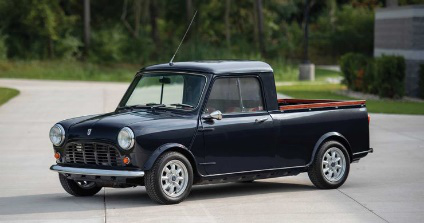
The original Mini Pickup
In 1961, just two years after the launch of the Mini by British Motor Corporation, the Mini Pickup was introduced. Small, simple, yet incredibly practical.
It was actually a utility vehicle built on the Mini Van platform, which was larger than the standard Mini. Due to its gross weight of 0.95 tonnes, the pickup was renamed the Mini 95 in 1978.
It measured approximately 3 to 3.4 metres in length, offering a compact, agile design with simple equipment for its time.
The modern Mini Pickup
In 2014, a group of design students created such a charming Mini Cooper pickup concept that we would gladly take one home if it ever became available. They used the Mini Cooper S Paceman as the base and named the concept the Mini Paceman Adventure. Although it attracted significant public interest, it never reached production.
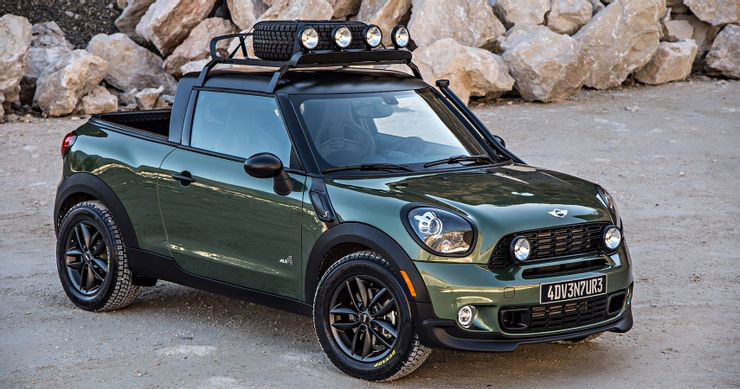
The Mini Paceman Adventure received a modified chassis, upgraded suspension and increased ground clearance to better tackle rough terrain. It also features a snorkel, allowing the little pickup to cross rivers without risking engine damage.
Additional roof-mounted lights improve visibility. To accommodate the cargo bed, the vehicle was designed with seating for only two occupants.
But would such a model make sense on today's market?
If the Japanese have what they call Kei cars, why not?
Considering today's heavy traffic, a Mini pickup would be much easier to manoeuvre through the city. Not to mention how much easier it would be to find a parking space.
Even if it wouldn't become a mass-market success, we believe such a Mini pickup would certainly find an owner… or perhaps an adventurous couple. What do you think?