
Shopping Cart
There are no more items in your cart
What Hand Signals Should You Know for Winching?
Author:
Content Pickup
- Categories :
Pickup
After installing a winch on your vehicle, carefully read the instruction manual and practice using it before heading off-road.
Winches can be dangerous when used improperly or without following the appropriate safety precautions.
If you become stuck, choose your anchor point carefully. Whether it is a tree, rock, or stump, it must be strong enough and allow the winching operation to pull the vehicle in the direction it will be moving.
An anchor point that is as far away as possible will provide the winch with the greatest pulling power.
In some situations, recovery may involve two people. In this case, communication between the spotter and the driver is essential for a safe and successful winching operation.
Our partners at Warn Industries highlight the proper hand signals that should be used when operating a winch. Let your teammate know and share this information with them before you set off.
Winching Hand Signals
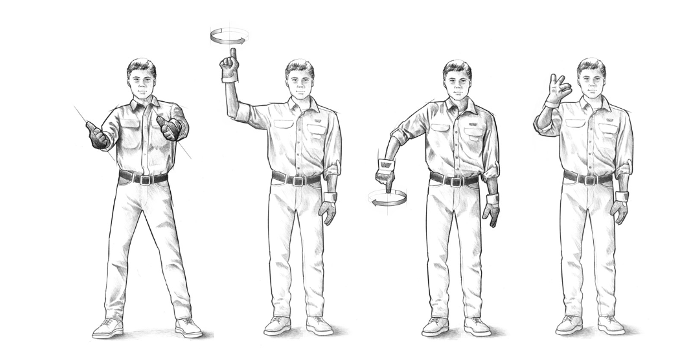
1) Steering Direction
Hold your arms straight out with your thumbs pointing upward, and tilt your hands in the direction you want the driver to steer.
2) Winch In
Hold your index finger up above shoulder height and make small circles in the air to indicate that the winch should pull the cable in.
3) Winch Out
Point your index finger downward and make circles in the air at approximately waist height to indicate that more winch cable should be fed out.
4) Pulse the Winch
This tells the driver to operate the winch in short, quick bursts. Open and close the tips of your two fingers until you want the winch to stop.
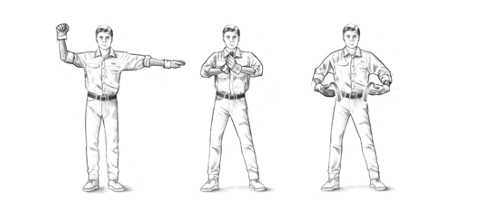
5) Stop the Winch
The stop signal for the winch is a closed fist with the palm facing the driver, held high enough for the driver to see it clearly, while the other arm is extended at shoulder height.
6) Braking
Cross your palms to tell the driver to apply the foot brake.
7) Drive Assist
This tells the driver to give the tires more traction to assist with the winching operation.
Have fun, stay safe, and keep exploring!