
Shopping Cart
There are no more items in your cart
Ford & Toyota Lead, Renault & Nissan/Mercedes Exit
Author:
Content Pickup
- Categories :
Pickup
"Trying to convert Europeans to pickup trucks was a mistake," says JATO analyst Felipe Munoz. But is that really the case?
Americans love pickup trucks and use them every day, whether for work or leisure, which is clearly reflected in sales figures. In Europe, however, things are different. Most people still prefer smaller, more affordable and practical vehicles for everyday transportation rather than using a pickup for recreational purposes.
A recent analysis based on data from JATO Dynamics reveals significant changes in the European pickup market.
Ford and Toyota dominate the segment, while Renault, Nissan and Mercedes are leaving the market.
Although 2017 started on a positive note with the launch of the Renault Alaskan and Mercedes X-Class, this did not translate into overall growth for the pickup segment. During the first quarter, the Ford Ranger remained Europe's best-selling pickup.
The European pickup market failed to meet the expectations set a few years earlier. As a result, several manufacturers have decided to withdraw from the segment, leaving Ford and Toyota as the only brands achieving consistently strong sales.
According to JATO Dynamics, pickup trucks accounted for just 6.9% of the European light commercial vehicle (LCV) market last year, with 116,280 units sold, down compared to 2017. Although forecasts predicted sales of more than 200,000 units in 2018, the market peaked at only 165,785 vehicles before falling again to 159,280 units in 2019.
Renault and Mercedes have exited the pickup market after failing to achieve significant sales.
The Renault Alaskan and Mercedes X-Class were built alongside the Nissan Navara at Nissan's Barcelona plant as part of a strategy to expand Nissan-based pickups across Europe.
Nissan's decision to close the Barcelona factory has raised questions about the future of the Navara, which ranked fourth among Europe's best-selling pickups during the first half of the year, according to JATO data. Although the facelifted Navara continues to be produced in Thailand, it appears that those versions will not replace the European market.
Mitsubishi could also leave the European market.
In 2020, Mitsubishi announced its intention to withdraw from Europe but continued selling vehicles in selected markets, while confirming that Renault-based models carrying the Mitsubishi badge would be introduced from 2023 onward.
It remains uncertain whether Mitsubishi will continue offering the L200, the third best-selling pickup during the first half of the year. A company spokesperson emphasized that the model already complies with the latest Euro 6d-temp emissions regulations. Mitsubishi also attempted to supply the L200 to Fiat under a cooperation agreement, but the project was unsuccessful.
Ford continues to strengthen its position.
The withdrawal of competing brands has undoubtedly benefited Ford, whose Ranger remained Europe's best-selling pickup during the first half of the year, followed by the Toyota Hilux.
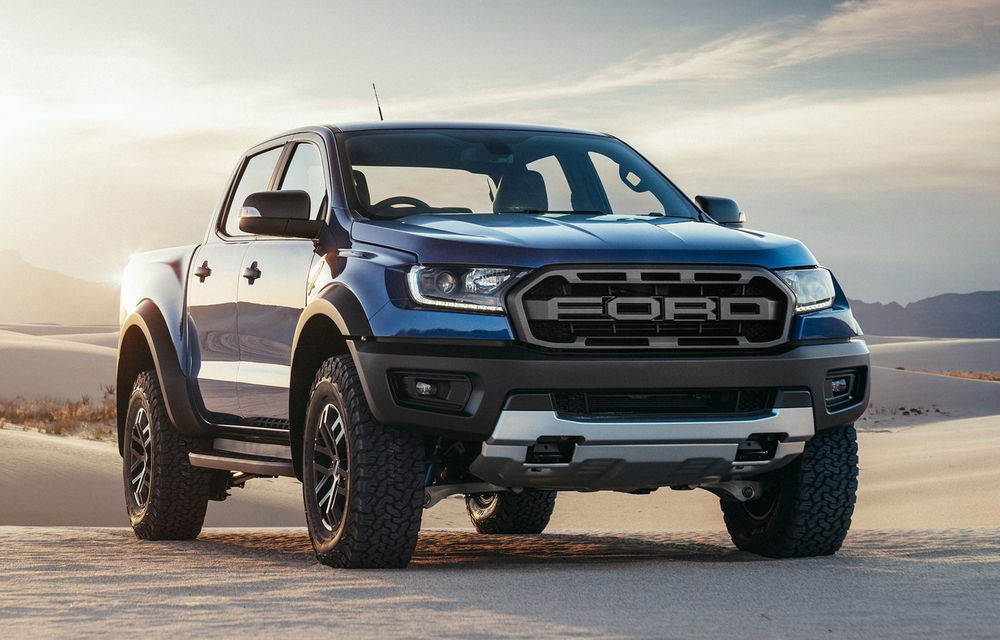
Ford offers the Ranger in Single Cab, Super Cab and Double Cab versions. During the first half of the year, however, 89% of customers chose the Double Cab with five seats and four doors. Furthermore, 78% opted for high-specification models such as the Wildtrak and Raptor, all equipped with four-wheel drive.
Customers don't just invest in the vehicle—they also spend significantly on accessories afterwards (and we can definitely confirm that! 😄).
Next year Ford will introduce a new Ranger developed alongside the next-generation Volkswagen Amarok as part of the strategic alliance between the two manufacturers. Both vehicles will be produced at Ford's plant in South Africa.
After a decade of slow sales, Volkswagen ended Amarok production at its Hanover plant in Germany last year. This partnership is expected to bring significant global benefits to both manufacturers.
Volkswagen also confirmed that the new Amarok will feature a completely distinct design from the Ford Ranger.
One of the biggest future challenges remains CO₂ emissions. The most obvious solution would be electric pickups, but that also comes with considerably higher costs. If Europe continues moving towards zero-emission mobility, pickup trucks will inevitably follow the same path.
Would you replace your pickup with an electric one?